

Workforce management software that covers the whole cycle
Time and attendance, scheduling, leave, compliance and payouts export in one platform.
Most organizations run workforce management across four systems that do not talk to each other, and reconcile them by hand every month. Worktivity covers attendance through to payouts export in one place, so the reconciliation stops being a job.
14-day free trial · No credit card required
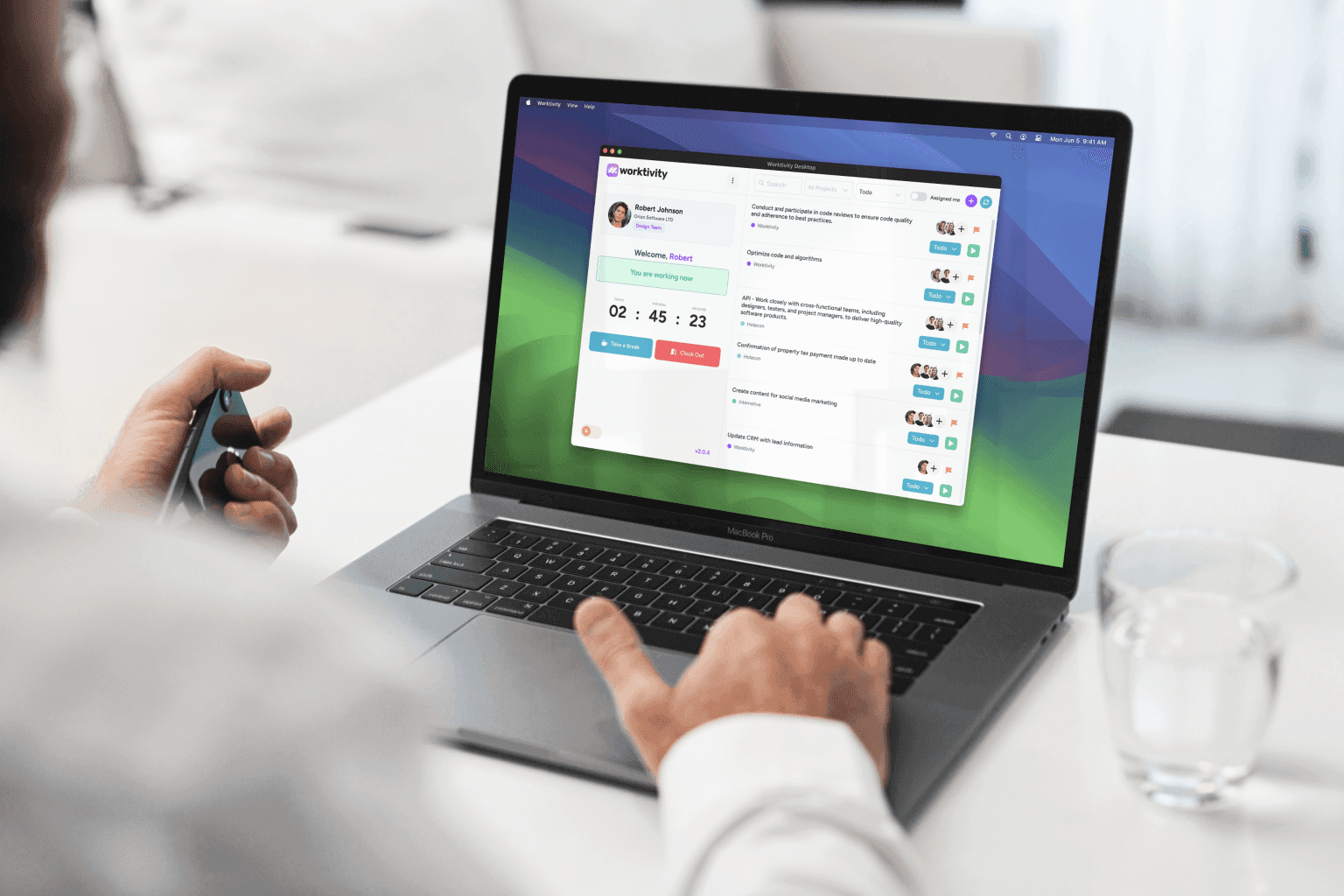
What the WFM platform covers
Eight modules spanning the full workforce management cycle.
Time and attendance
Automated clock-in and clock-out, break tracking and attendance records that feed payouts without manual transcription.
Scheduling and planning
Shift planning, coverage checks and shift trading, with labor cost visible while the schedule is being built rather than after it is published.
Leave and time-off management
Requests, approvals and balances handled in one flow, with each entitlement tied to a leave year and unused days carried into the next one.
Compliance and labor law
Working time, overtime and mandatory break rules monitored continuously, with exportable evidence for inspections and audits.
Payouts integration
Verified attendance and overtime data exported straight to payouts, which removes the largest single source of payouts error.
Labor cost management
Cost tracking against budget, forecasting and variance analysis at team, site and organization level.
Employee self-service
Schedules, time records, leave balances and requests accessible to employees directly, which removes most routine administrative traffic.
Analytics and reporting
Productivity, attendance, cost and coverage reporting from the same dataset that runs the operational side.
What consolidation is worth
Five consequences of running workforce management from one system instead of four.
Operations without reconciliation
When attendance, scheduling and payouts share one dataset, the monthly reconciliation exercise simply stops existing.
Compliance you can evidence
Working time and break compliance tracked continuously, with the audit trail produced as a by-product rather than as a project.
Labor cost under control
Cost visible while the schedule is being built is worth far more than cost reported after the period closes.
Planning with real data
Coverage, demand and capacity from one source, which makes forecasting a calculation rather than an argument between systems.
Less administrative load
Self-service removes the routine questions about schedules, balances and records that otherwise consume manager and HR time.
Why one platform matters
Four structural advantages of a consolidated WFM system.
One dataset, one truth
Time, scheduling, leave, compliance and analytics built on the same records, so no two reports disagree about the same week.
Automation over administration
Scheduling, leave processing, time capture and reporting all run automatically. What is left for people is the exceptions.
Real-time operational view
Live dashboards for attendance, coverage, productivity and cost, which is what turns workforce management from reactive into proactive.
Scales without re-platforming
The same system covers a single site and a multi-country operation, so growth does not force a migration project.
What WFM consolidation delivers
Figures reported by customers who replaced several systems with one.
20-30% lower labor cost
From coverage matched to demand, controlled overtime and eliminated over-scheduling.
80% less administration
Automated scheduling, leave and time capture remove the bulk of routine workforce administration.
Reduced compliance exposure
Continuous monitoring and a complete audit trail turn labor law compliance from a periodic risk into a standing state.
Sectors running full WFM
Where scheduling complexity or labor cost makes an integrated system necessary.
Retail & hospitality
Demand-driven shift patterns where labor cost control and coverage are in direct daily tension.
Healthcare & medical services
Complex rotas, mandatory coverage and strict working time rules, all of which have to hold simultaneously.
Manufacturing & operations
Shift-based production where scheduling accuracy translates directly into output and into overtime cost.
Contact centers & customer service
Volume forecasting and agent scheduling, where a small coverage error becomes a large service-level failure.
Construction & field services
Distributed crews, mobile time capture and project-level labor cost tracking across sites.
Professional services & consulting
Project time, resource allocation and billing running on the same attendance data that feeds payouts.
Related Worktivity guides
Neighboring topics, in case you arrived here from a slightly different question.
AI Productivity Software
Machine learning applied to the activity data your team already produces.
Learn moreEmployee Activity Monitoring
App, website and input-level visibility with a searchable activity history.
Learn moreEmployee Productivity Monitoring
Measurement, goals and dashboards for the productivity of individual employees.
Learn more
Workforce management software questions
What operations and HR leaders ask when consolidating WFM systems.
What is workforce management software?
A platform covering time and attendance, scheduling, leave, labor law compliance, payouts integration and workforce analytics in one system rather than several.
How does workforce management software work?
Attendance is captured automatically, schedules are built against demand and cost, leave and compliance rules are applied by the system, and verified data is exported to payouts.
What features does it include?
Time and attendance, scheduling, leave management, compliance monitoring, payouts integration, labor cost management, employee self-service and reporting.
Does it integrate with payouts?
Yes. Verified time, attendance and overtime data export directly to common payouts systems, which removes the manual transcription step where most payouts error originates.
How does it ensure compliance?
Working time, overtime and break rules are monitored continuously against your configured policy, with breaches flagged and a complete audit trail retained for inspection.
How much does workforce management software cost?
$3.99 per user per month with a 14-day free trial. The WFM modules are part of the platform rather than separately licensed.
Can employees manage their own records?
Yes. The self-service portal covers schedules, time records, leave balances and requests, which removes most routine administrative traffic.
Which industries use workforce management software?
Retail, hospitality, healthcare, manufacturing, contact centers, construction and professional services. In short, anywhere scheduling is complex or labor cost is the dominant line item.
Run workforce management from one system
Start free for 14 days and see attendance, scheduling and labor cost in a single view.
14-day free trial · No credit card required