

Productivity Tips
Time Theft at Work: What It Is, What It Costs, and How to Prevent It in 2026
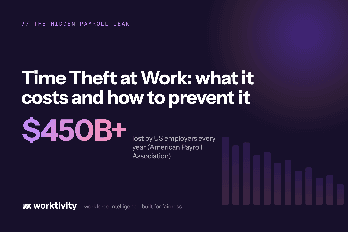
Time theft costs US employers an estimated $450 to $550 billion a year. Here are the 7 types, why it happens, and how to prevent it without…
Worktivity Team6 min read
Productivity is one of the most discussed topics in modern workplaces. Yet many companies still struggle with a simple question:
How do we actually measure productivity?
For decades, productivity was often associated with hours worked. If someone spent more time at the office, they were assumed to be productive. But today’s workplaces look very different. Remote teams, hybrid work environments, and digital collaboration tools have changed how work gets done.
As a result, organizations are shifting from measuring time spent working to measuring actual productivity metrics.
Productivity metrics help companies understand how work happens across teams, identify inefficiencies, improve workflows, and support employees more effectively.
In this guide, we will explore everything managers need to know about productivity metrics, including:
What productivity metrics are
Why they matter
The most important metrics to track
How to measure them
How modern productivity analytics tools help organizations make better decisions
Productivity metrics are measurable indicators that help organizations evaluate how efficiently work is being performed.
Instead of relying on subjective observations, productivity metrics provide data-driven insights into employee performance, workflow efficiency, and time utilization.
These metrics can measure different aspects of work, including:
task completion
time usage
output quality
resource utilization
collaboration efficiency
Productivity metrics help organizations answer important questions such as:
Are employees spending time on the right tasks?
Where do productivity bottlenecks occur?
How can workflows be improved?
Which teams are overloaded?
By analyzing these metrics, companies can make more informed management decisions.
Tracking productivity metrics offers several strategic benefits.
Managers often lack visibility into how work is performed across teams.
Productivity metrics provide insights into:
work patterns
task engagement
time distribution
This visibility helps leaders understand how teams operate on a daily basis.
Instead of relying on assumptions, organizations can use productivity data to make better decisions.
For example:
adjusting workloads
reallocating resources
optimizing processes
Sometimes productivity issues are not caused by employees but by inefficient processes.
Metrics can reveal:
unnecessary meetings
slow approval processes
inefficient tools
Remote and hybrid teams require different management approaches.
Productivity metrics allow companies to measure work performance without relying on physical presence.
Not all productivity metrics measure the same thing. They typically fall into several categories.
Time-based metrics analyze how employees spend their working hours.
Examples include:
active working time
idle time
time spent on projects
billable vs non-billable hours
These metrics help organizations understand how time is allocated across tasks.
Activity metrics measure employee interaction with tools and systems.
Examples include:
application usage
website usage
activity levels (keyboard and mouse interaction)
These metrics provide insight into work behavior.
Output metrics focus on the results of work rather than activity.
Examples include:
tasks completed
tickets resolved
sales closed
code commits
These metrics are particularly useful for evaluating performance.
Efficiency metrics measure how effectively resources are used.
Examples include:
time per task
cost per output
project completion speed
While every organization is different, several productivity metrics are widely used across industries.
Active time measures how much time employees spend actively working on their computers.
It typically includes:
keyboard activity
mouse interaction
application usage
Idle periods are automatically excluded.
This metric helps managers understand real working time instead of logged-in hours.
Idle time measures periods when employees are inactive.
This may include:
breaks
distractions
waiting time
Analyzing idle time helps organizations identify potential productivity issues.
Application usage metrics track how much time employees spend in different software tools.
For example:
development tools
communication platforms
design software
social media
This helps organizations understand how tools affect productivity.
Website usage metrics show which websites employees visit during work hours.
This helps managers identify:
productivity distractions
research activities
workflow dependencies
Task completion rate measures how many assigned tasks are completed within a given period.
This metric helps evaluate:
team productivity
project progress
individual workload capacity
Many organizations track billable hours separately from non-billable work.
Billable work generates revenue, while non-billable tasks may include:
internal meetings
administrative tasks
training
Understanding this balance helps companies optimize profitability.
Project time allocation measures how much time employees spend on different projects.
This helps organizations:
track project costs
monitor progress
evaluate resource allocation
Some monitoring tools calculate productivity scores based on activity and application usage.
These scores help managers quickly understand productivity trends across teams.
Workload metrics show how work is distributed across teams.
This helps managers identify:
overloaded employees
underutilized resources
Focus time measures uninterrupted periods of deep work.
High focus time often correlates with higher productivity levels.
Organizations can measure productivity metrics using several approaches.
Employees report time spent on tasks manually.
However, this method often leads to inaccuracies.
Many project management platforms track tasks and progress.
Examples include:
Jira
Asana
Trello
Time tracking tools automatically record working hours.
Advanced platforms analyze activity data to generate productivity insights.
These systems combine:
activity tracking
time tracking
analytics dashboards
Tools like Worktivity help organizations understand productivity patterns through automated analytics.
Companies sometimes misuse productivity metrics.
Common mistakes include:
High activity does not always mean high productivity.
Employees may appear active while producing little meaningful work.
Productivity metrics should support employees, not control them.
Micromanagement can harm morale.
Metrics should always be interpreted within the context of job roles and responsibilities.
Different teams require different productivity metrics.
Important metrics include:
code commits
pull requests
issue resolution
sprint velocity
Key metrics include:
calls made
deals closed
conversion rates
Relevant metrics include:
ticket resolution time
customer satisfaction scores
response time
Artificial intelligence is transforming productivity measurement.
AI-powered analytics tools can:
detect productivity patterns
identify workflow inefficiencies
provide management recommendations
These insights help organizations improve productivity without micromanagement.
As work environments evolve, productivity metrics will continue to change.
Future trends include:
AI-driven productivity insights
workforce analytics platforms
real-time productivity dashboards
predictive workload management
Companies that adopt data-driven productivity management will gain a competitive advantage.
Productivity metrics help organizations move beyond guesswork and manage work more effectively.
By tracking the right metrics, companies can:
improve productivity
optimize workflows
support employees
make better management decisions
Modern productivity analytics platforms like Worktivity help organizations understand how work actually happens, enabling teams to become more efficient and focused.
More from the same corner of the blog.
Time theft costs US employers an estimated $450 to $550 billion a year. Here are the 7 types, why it happens, and how to prevent it without…
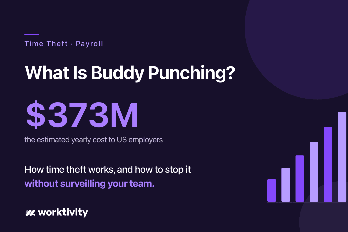
Buddy punching costs US employers an estimated $373M a year. Here's what it is, why time clocks miss it, and how to prevent time theft without…

Most remote team management guides give you tips. This is the operations playbook: hiring, onboarding, daily ops, performance, and scaling, chapter…
Worktivity turns the activity your team already generates into a picture you can act on: automatic time tracking, productivity scores and payout-ready reports.
Free 14-day trial. No credit card required.